Patient presentation
A 38-year-old man with a 12-year history of OUD and multiple prior failed cessation attempts presented after a fentanyl overdose. After the overdose, the patient's mother, who had learned of our clinic, encouraged him to seek treatment, and he presented to our acupuncture clinic with his father. He was stabilized on buprenorphine/naloxone 16 mg/4 mg daily by his physician and concurrently began twice-weekly 40-minute NADA auricular acupuncture sessions at our clinic. His physician implemented a gradual, individualized taper in approximately 25% dose-reduction increments. The patient reported experiencing no withdrawal symptoms at each reduction while attending acupuncture. Over approximately three years he was fully tapered off medication and has maintained abstinence. The patient continues NADA sessions for maintenance under ongoing physician supervision.
Treatment plan
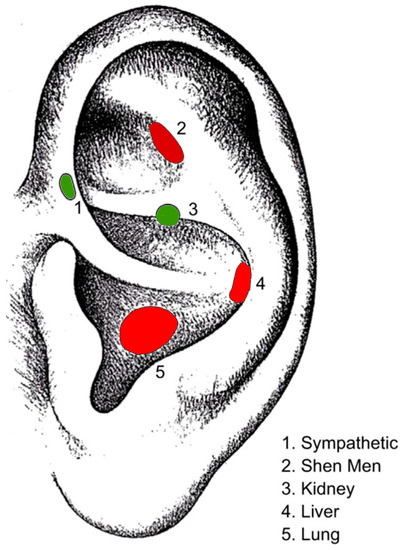
The patient attended our clinic twice weekly for 40-minute auricular acupuncture sessions delivered according to the NADA protocol.The standard NADA protocol uses five bilateral auricular points: sympathetic, Shen Men, Kidney, Liver, and Lung.
Outcome
This case documents an unusually successful, sustained taper from buprenorphine/naloxone to abstinence, accompanied by adjunctive NADA acupuncture and the patient's report of no withdrawal symptoms. While a single case cannot establish that acupuncture caused these outcomes, the case supports formal study of NADA as an adjunct to medication-assisted taper. Keywords: opioid use disorder; fentanyl; buprenorphine/naloxone; medication taper; auricular acupuncture; NADA protocol; case report
Discussion
The reported absence of withdrawal symptoms is the element most directly relevant to the role of acupuncture. Auricular acupuncture known to activate the parasympathetic system via the vagus nerve which controls the activity of the cardiovascular, respiratory, and gastrointestinal systems and has effects on smooth muscles, blood vessels, sweat glands, and the endocrine system[1][2][3]. Adjunctive auricular acupuncture has been associated in the literature with improved engagement and retention and with reductions in craving, anxiety, and physical discomfort,[4][5] and one plausible mechanism by which it could support a taper is by easing the daily discomfort and stress that often drive patients to abandon dose reductions.
References
1- Lin, Z., Chen, Y., Fan, C., Wu, H., Lan, L., & Lin, J. (2011). Effects of auricular acupuncture on heart rate, oxygen consumption and blood lactic acid for elite basketball athletes. The American Journal of Chinese Medicine.
2- Xu, F., Liu, X., Liu, Z., Chen, J., & Dong, B. (1992). The role of ear electroacupuncture on arterial pressure and respiration during asphyxia in rabbits. Zhen Ci Yan Jiu.
3- Gao, X., Zhang, S., Zhu, B., & Zhang, H. (2008). Investigation of specificity of auricular acupuncture points in regulation of autonomic function in anesthetized rats. Autonomic Neuroscience.
4- Baker TE, Chang G. The use of auricular acupuncture in opioid use disorder: a systematic literature review. Am J Addict. 2016;25(8):592–602. doi:10.1111/ajad.12453.
5- Stuyt EB, Voyles CA, Bursac S. NADA protocol for behavioral health: putting tools in the hands of behavioral health providers—the case for auricular detoxification specialists. Medicines (Basel). 2018;5(2):20.
For educational purposes only; not medical advice. Patient consent obtained and identifying details removed.